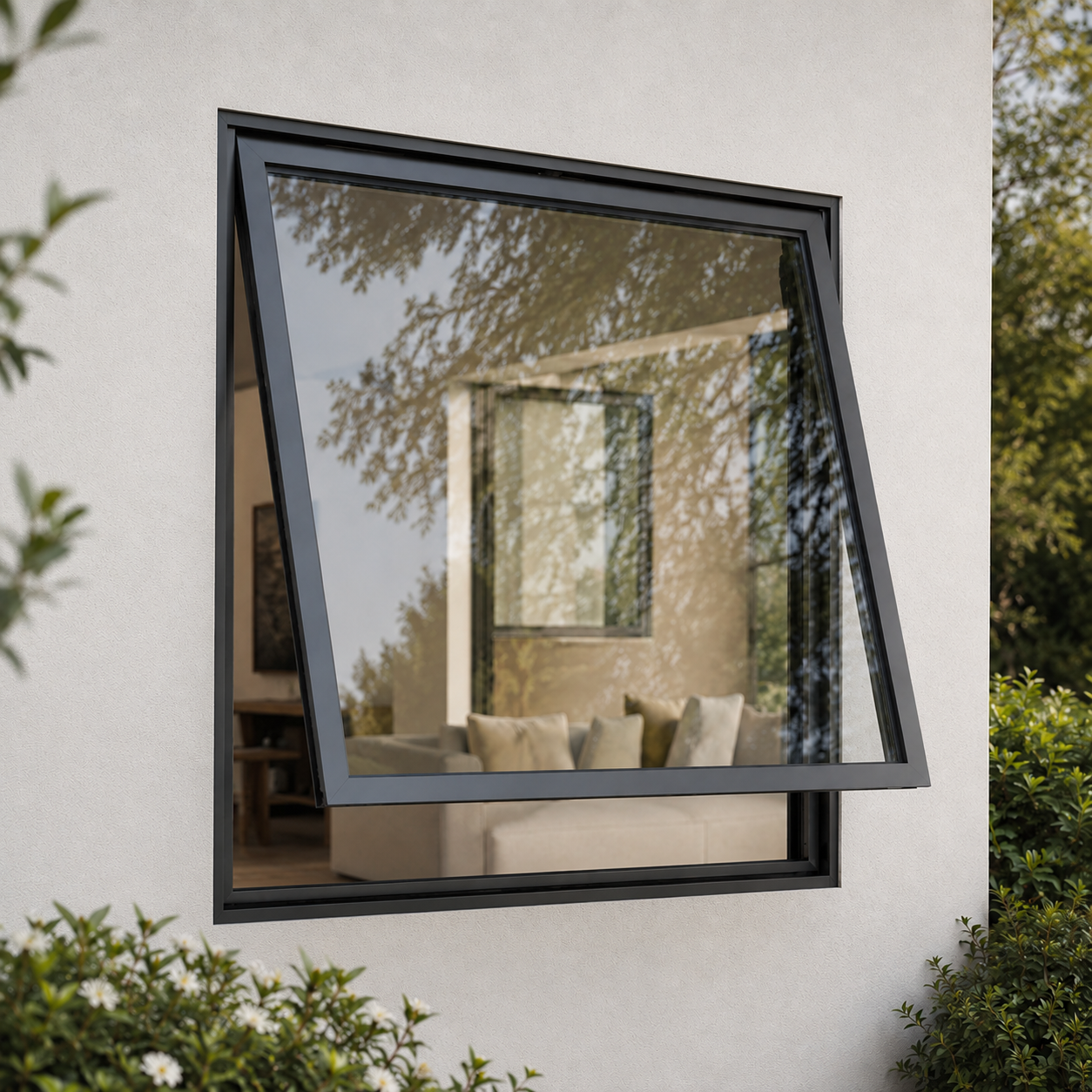
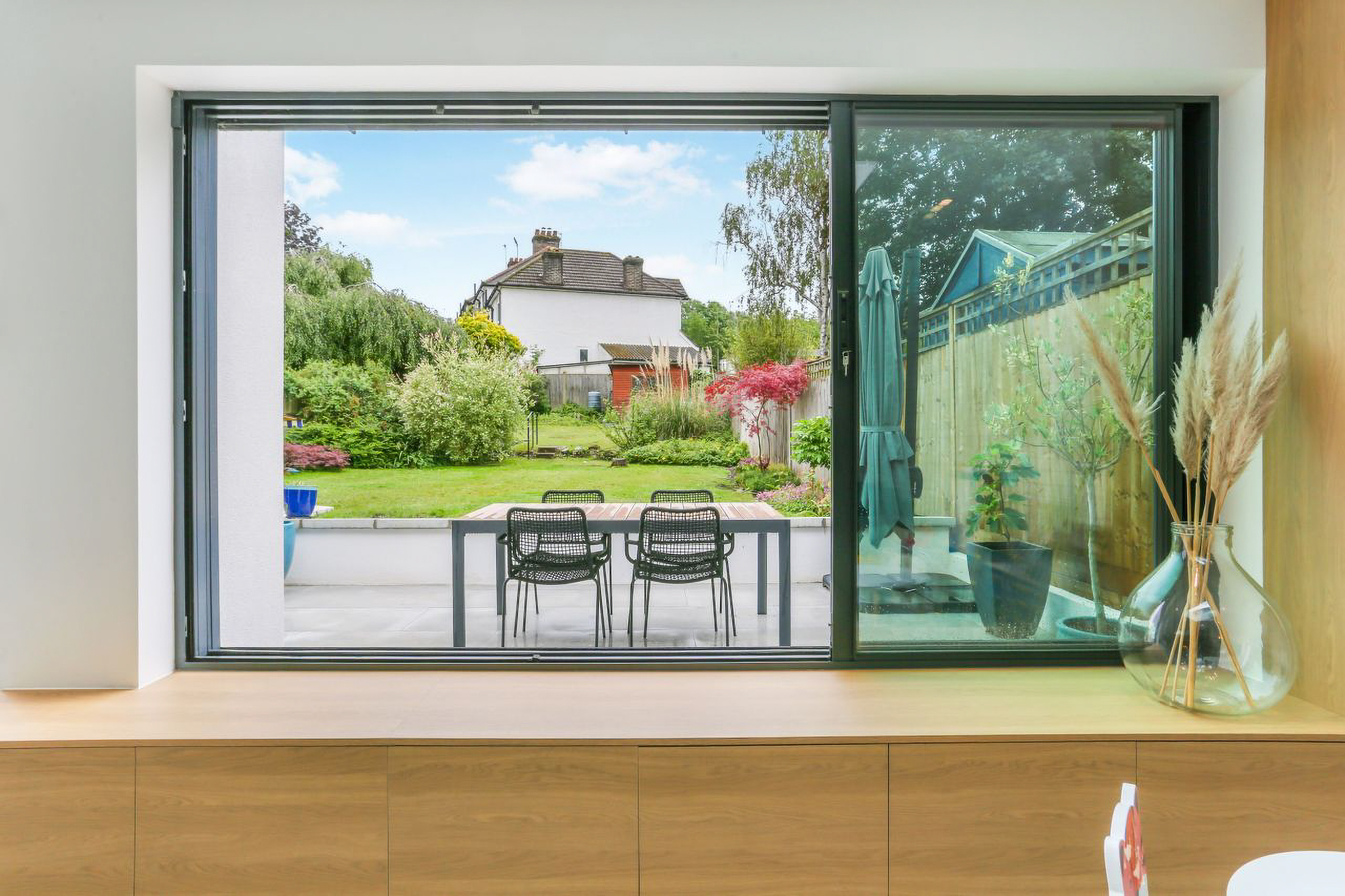
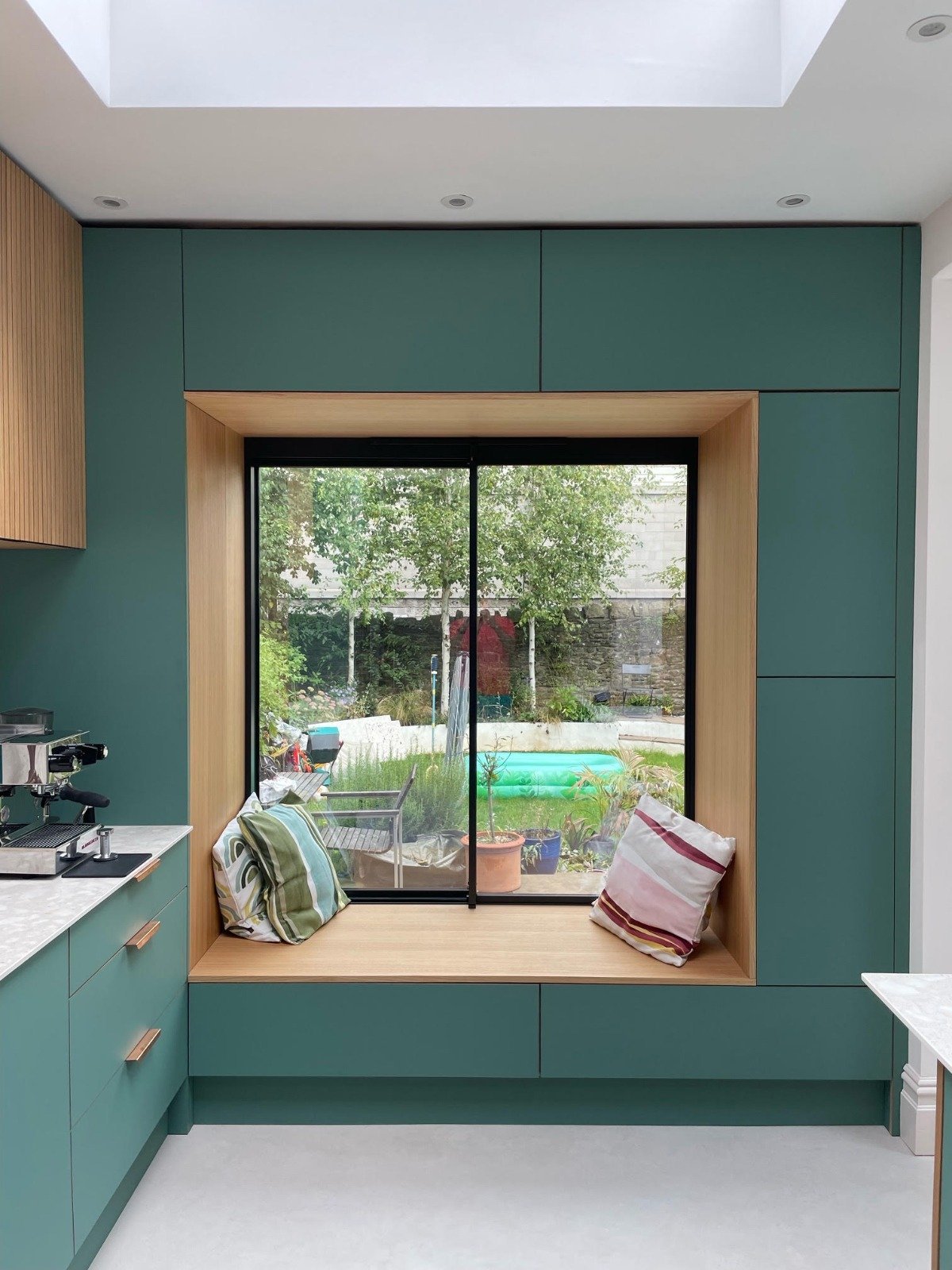
Frameless oriel windows combine architectural impact with practical specification requirements. They promise outstanding visual results by maximising the glass, reducing the amount of visible frame or structure and create impressive views from inside the room.
Understanding what drives cost and complexity is essential before committing to a project. Whether you're planning a kitchen extension, window-seat feature or contemporary living space, frameless oriel windows are achievable. But cost depends on multiple factors: size, glass specification, structural support, site access, finish options and installation complexity.
At Glideline, we manufacture bespoke frameless and minimal-frame oriel systems for trade professionals and installers throughout the UK. This guide explains what affects cost, what to expect during installation and how to prepare accurate information for a quotation.
Because Glideline manufactures bespoke aluminium and structural glazing systems rather than standard stock products, we are often involved long before manufacturing begins. Working alongside installers, architects and structural engineers allows potential issues to be resolved during the design stage rather than on site, where changes are invariably more costly.
What Is a Frameless Oriel Window?
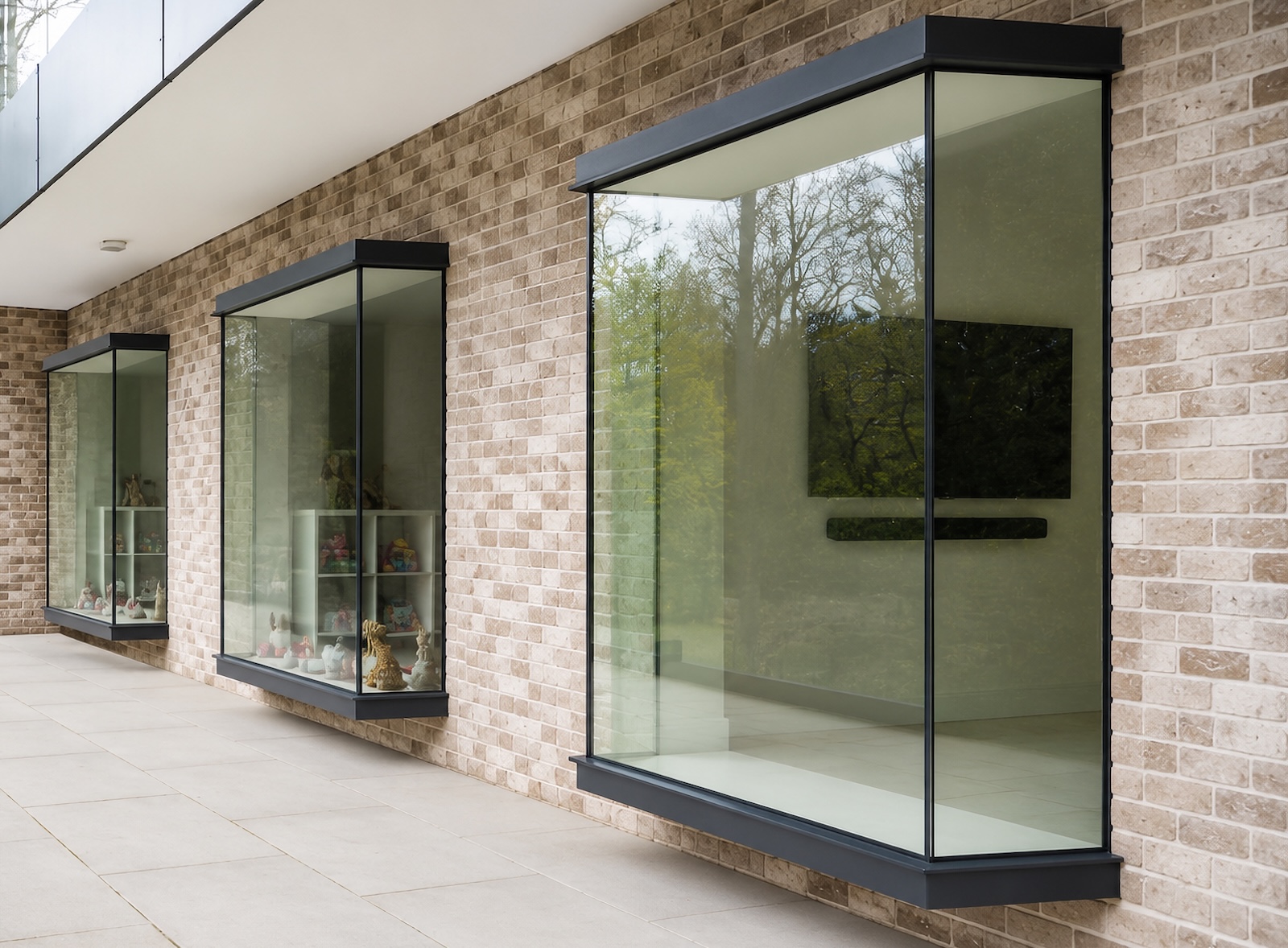
A frameless oriel window is a projecting glazed structure with minimal visible frame. Oriel windows frequently feauture glass-to-glass corners held with structural silicone rather than visible frames, mullions or glass patch fittings or brackets. The finished result by an expert manufacturer, is a distinctive projecting window you can use internally as functional and usable extra space and admire from the outside.
How Frameless Oriel Windows Differ from Standard Windows
Standard windows fit into existing openings. Frameless oriel windows are structural features and they project beyond the building face. These are sophisticated glass constructions and as such, require dedicated structural support and often form the visual focal point of a room. The glazing itself may carry weight and loads, and glass-to-glass corners demand specialist detailing and precision manufacturing.
Common Project Types
Frameless oriel windows appear in kitchen extensions (creating a feature dining or breakfast area), bedroom extensions (maximising light and views), window-seat installations, living room features and contemporary new builds. They work particularly well where architects want to emphasise glass over structure and create a sense of space.
Why Minimal Sightlines Matter
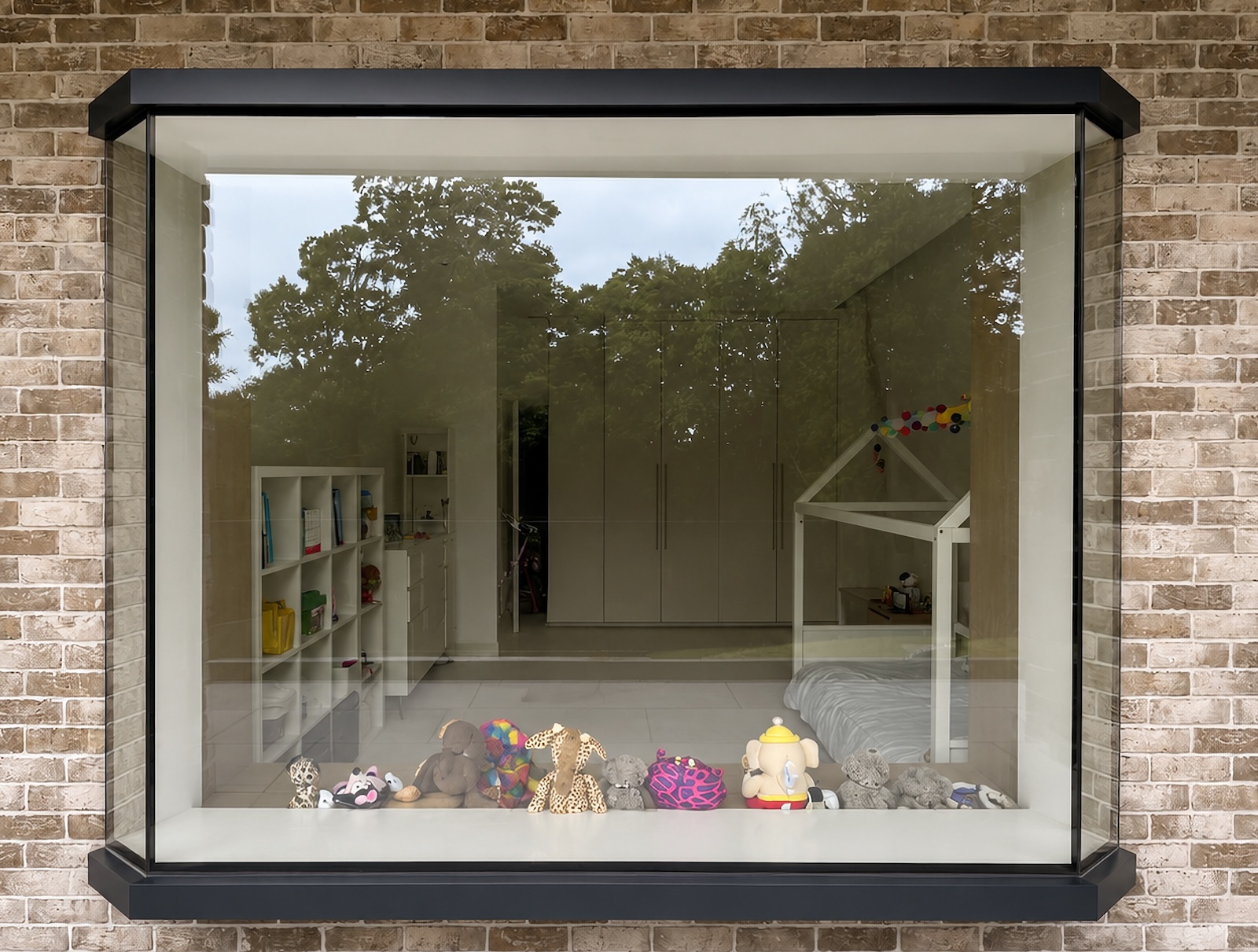 Minimal sightlines is at the heart of every modern product. From the slimmest sliding door in the UK with our GS15, to slimlines steel-inspired or hidden sash windows. Oriel and frameless windows are essential in creating and supporting other slimline products around your home, renovation or building project.
However, reducing any sightline or visible frame increases engineering and manufacturing demands. Thinner aluminium profiles, structural glass design and precision tolerances all add complexity. Understanding this trade-off helps explain both cost and the importance of accurate surveying.
Design Benefits of Frameless Oriel Windows
Frameless oriel windows deliver tangible design advantages that justify their specialist specification in contemporary projects and more complex manufacturing and design.
More light thanks to uninterrupted glazing areas from multiple directions, reducing reliance on artificial lighting
Cleaner architectural appearance, with no visible frame emphasises the glass more
Improved views as most frameless oriel windows have no mullions, transoms or frame elements
Usable internal space created by the external projection, for a window-seat or extra floor area
What Affects the Cost of a Frameless Oriel Window?
Cost is rarely straightforward because every frameless oriel is bespoke. Understanding the key variables helps explain why quotations vary and what information suppliers need.
Cost Factor | Why It Matters |
Overall size | Larger units require more glass, stronger structural support, specialist lifting equipment and more handling risk. Size is often the dominant cost driver. |
Projection depth | Greater projection increases structural steel requirements, affects load calculations and may influence planning and Building Regulations assessment. |
Glass specification | Double vs triple glazing, low-E coatings, solar control, safety glazing, acoustic requirements and easy-clean coatings all affect price. Thermal performance demands typically increase cost. |
Structural support | Simple support (built by the contractor) is less costly than bespoke steel or specialist structural requirements. Structural complexity directly affects engineering and manufacturing time. |
Fixed vs opening | Fixed glazing is simpler and less expensive than systems with opening casements or vents. Opening elements add hinges, hardware, seals and testing requirements. |
Site access | Restricted access (narrow gardens, tight spaces, upper floors) may require specialist lifting equipment, smaller delivery vehicles or phased assembly, all of which increase costs. |
Finish and colour | Standard anodised finishes are standard. Powder coated colours, special finishes or bespoke RAL colours may extend lead times and add cost. |
Installation complexity | Coordination with builders, structural engineers and trades, site-specific detailing and complex weatherproofing all increase project management and installation time. |
Installation Approach | Pre-fabrication to exact specs reduces two-stage site work, lowering labour costs and timeline |
Location | City centre loading/unloading restrictions or countryside locations/roads that may not be suitable for all vehicles. |
Each of these variables influences the final cost. A small, simple frameless oriel with basic double glazing and straightforward site access will cost significantly less than a large, triple-glazed system with complex structural requirements and restricted access. Understanding your specific needs helps suppliers provide accurate quotations.
Can You Give a Typical Oriel Window Price?
Every frameless oriel window should be priced from drawings and site requirements rather than generic square-metre figures. This is because a small, straightforward system can differ dramatically in cost from a large, structurally complex one.
What matters is getting an accurate quotation based on your specific project. This means suppliers need:
Architectural drawings or sketches showing the intended design
Approximate dimensions (width, height, projection)
Glazing preferences (thermal performance, solar control, safety requirements)
Information about structural support and site access
Once a supplier has this information, they can arrange a site survey to refine dimensions, discuss structural requirements with your engineer and provide a realistic quotation. This approach takes more effort than a quick online estimate, but delivers an accurate price that reflects your actual project.
Traditional vs Modern Installation Approaches
 Historically, structural glazing companies would design each installation individually using CAD drawings and standard aluminium support sections. Much of the supporting framework was fabricated or adapted specifically for the project, often requiring multiple site visits. In many cases, the aluminium framework was installed first, followed by a second visit once final glazing dimensions had been confirmed and the glass manufactured.
Installation stages:
on-site survey
trim installation
measure and fit glazing.
This created delays and coordination challenges. In fact, this remains the way most other frameless oriel window manufacturers provide their products. Modern engineered glazing systems take a different approach.
Rather than creating every project from scratch, Glideline is unique in having developed complete oriel window systemss that are manufactured to the agreed design before arriving on site. The supporting aluminium components, connection details and glazing interfaces have already been engineered as part of the product.
This changes the installation process significantly. Experienced aluminium window installers can install sophisticated architectural glazing systems without relying on a specialist structural glazing contractor for every project.
While every installation still requires careful surveying, technical drawings and coordination with builders and structural engineers, much of the complexity has already been resolved during the product’s design and engineering.
A Glideline product arrives ready to fit, reducing on-site time, labour complexity and scheduling friction. This approach benefits specifiers, installer and end-user clients because it:
Simplifies installer requirements (standard fitters can handle it)
Reduces installation timeline
Lowers overall labour cost
Minimises site disruption
This approach benefits everyone involved in the project. Installers spend less time solving problems on site, builders can programme work more efficiently, and homeowners benefit from a more controlled manufacturing and installation process while still achieving the clean, contemporary appearance expected from frameless architectural glazing.
Survey Accuracy
Tolerance is tighter with frameless systems. Small surveying errors become visible once the windows are installed. Professional surveying during the quotation phase, often conducted by the manufacturer or a trained surveyor, reduces risk and ensures fabrication is accurate. This site survey typically covers opening dimensions, structural condition, access routes and weatherproofing details.
Structural Opening and Support
The structural opening must be prepared to specification and support details confirmed before installation begins. Your structural engineer and builder work with the glazing supplier to ensure openings are ready. Any discrepancies between design and site conditions must be resolved before the glazing arrives.
Handling Large Glass Units
Frameless oriel windows often feature large glass panels. Safe handling requires appropriate lifting equipment, trained operatives and clear access routes. Site constraints (narrow gardens, multi-storey buildings, internal stairs) may require specialist equipment or phased assembly, which affects timeline and cost.
Weatherproofing and Drainage
Oriel windows project outward and collect water. Proper drainage, sealing and weatherproofing are critical to performance. Installation must follow the supplier's detailed specifications. This includes sealant application, gasket positioning and drainage channels, all essential product functions that cannot be improvised on site. Poor weatherproofing leads to costly remedial work.
Manufacturing Lead Times
Bespoke frameless oriel windows are manufactured to order, typically after design approval. Lead times vary depending on project complexity, current manufacturing schedule and finish options. Early coordination with suppliers helps align manufacturing with your construction programme.
Planning and Building Regulation Considerations
Frameless oriel windows trigger planning and Building Regulation requirements that must be addressed before specification.
Planning Permission
Planning permission may be required depending on projection, elevation, overlooking implications, property type and conservation status. Discuss requirements with your architect and local planning authority early. Some projects fall under permitted development; others require formal application. Avoid surprises by confirming requirements before detailed design.
Building Regulations
Building Regulations approval is always required. Frameless oriel windows in most cases wil be required to meet
· Structural requirements (Part A)
· Fire safety (Part B)
· Fall protection (Part K)
· Energy efficiency (Part L)
Glazing specification, including safety glass and thermal performance, should be confirmed before installation. Your builder and building control officer would normally work with the various trades to confirm compliance.
What Information Is Needed for an Accurate Quote?
Preparing this checklist before contacting suppliers streamlines the quotation process and helps you get accurate pricing quickly.
Design and specification:
Architectural drawings or sketches showing the intended oriel window position and design
Approximate dimensions: width, height and projection depth
Glazing preferences: double or triple glazing, thermal performance targets, solar control, safety requirements, easy-clean options
Structural and site information:
Information about structural support (is it being provided by the builder, or do you need bespoke structural design?)
Site access constraints (narrow gardens, tight spaces, multi-storey access, restricted lifting)
Building type (new build, extension, retrofit) and stage of construction
UK location (helps suppliers understand lead times and installation logistics)
Project timeline:
Desired installation date or construction programme schedule
Any planned site visits or architect/engineer input timing
Additional preferences:
Preferred finish or colour options
Fixed glazing or opening elements (casements, vents, etc.)
Once you've prepared this information, contact a supplier for a site survey and detailed quotation. The survey allows the supplier to verify dimensions, assess structural requirements and discuss detailing with your architect or engineer. This process takes time but results in a realistic price based on your actual project, not generic estimates.
Glideline Oriel Windows – made for all installers
Frameless oriel windows are ambitious but achievable, especially with systems designed for straightforward installation and minimal site disruption. Manufacturing takes time, but installation can be fast and controlled. At Glideline, we design systems that work with standard installers rather than demand specialist labour. This means clearer timelines, simpler coordination and lower project risk. | 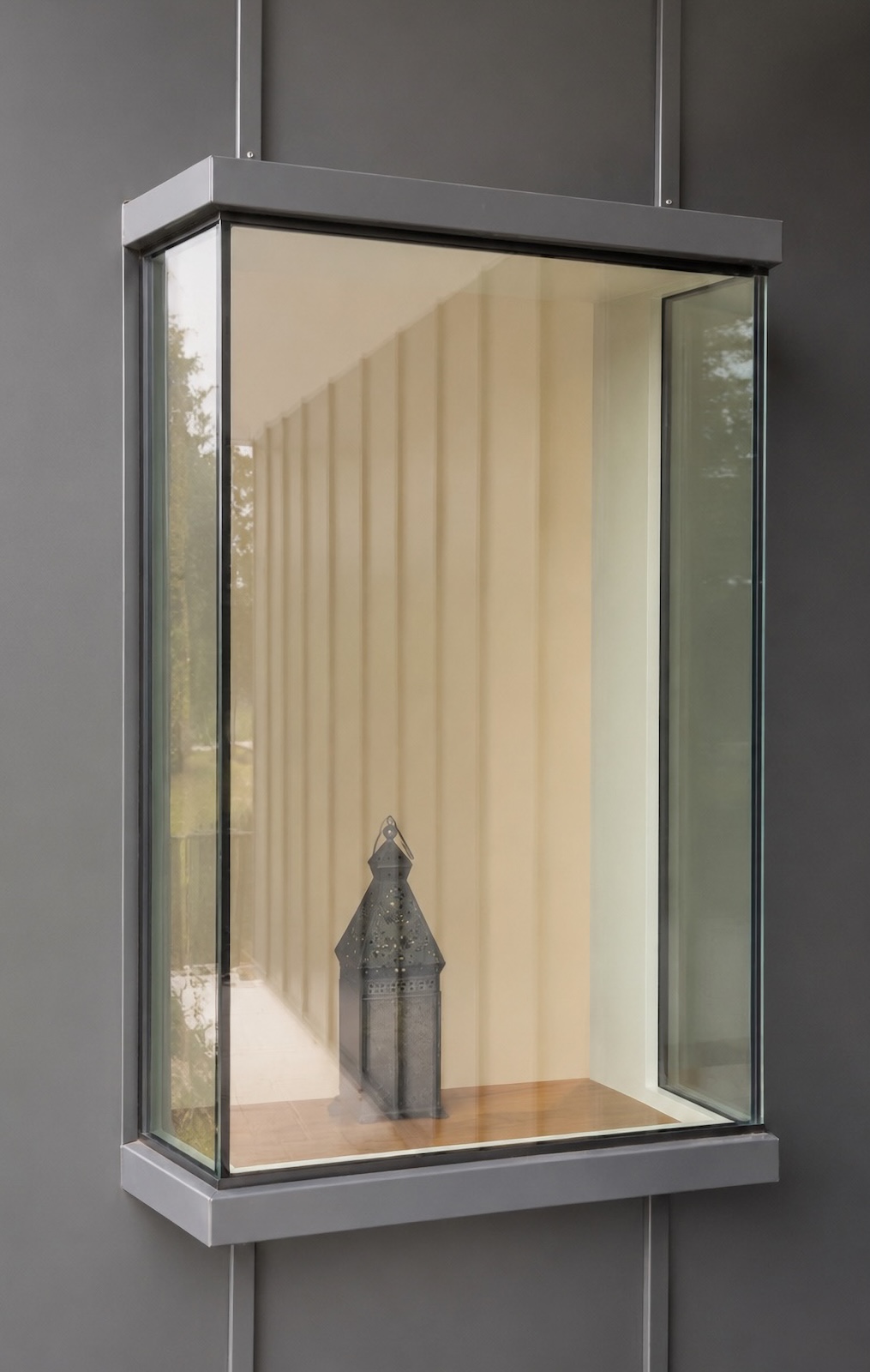
|
Frameless Oriel Windows: Frequently Asked Questions
Are frameless oriel windows expensive?
Frameless systems cost more than standard framed windows because of precision engineering, specialist glazing, structural design and careful manufacture. However, cost is relative to project size, glass specification and complexity. Smaller, simpler systems cost less than large, structurally complex ones.
What affects the cost of an oriel window?
Size, projection, glass specification, structural support requirements, site access, fixed vs opening elements and installation complexity all drive cost. See the cost factors table above for detail on each variable.
Can a frameless oriel window open?
Yes, but many contemporary frameless designs remain fixed. Opening elements (casements, vents, tilt-and-turn) add cost and complexity. If ventilation is desired, alternative ventilation strategies elsewhere in the room often work better.
Do oriel windows need planning permission?
Some projects do, depending on projection, property type, conservation status and local planning policy. Discuss with your architect and local planning authority early to avoid design rework later.
Are frameless oriel windows energy efficient?
Modern frameless systems can achieve excellent thermal performance when specified with appropriate glazing (typically triple glazing with low-E coatings). Performance depends on glass specification, frame design and installation detailing.
What glass is used in frameless oriel windows?
Double or triple glazing units with safety glazing (toughened or laminated). Low-E coatings, solar control glass, easy-clean coatings and acoustic options are available depending on project requirements.
Can frameless oriel windows be used in kitchen extensions?
Yes, they are particularly popular in kitchens where they create a bright, feature-rich dining or breakfast area. Ensure structural support, thermal performance and safety glazing are appropriate to your location and building requirements.
How long does a frameless oriel window take to manufacture?
Manufacturing lead times vary based on project complexity and current production schedules. Suppliers typically provide timescales once design has been approved. Early coordination helps align manufacturing with your construction programme.
Do installers need special equipment?
Yes. Large glazing panels require appropriate lifting equipment, specialist handling and experienced installation teams. Site access constraints may require additional equipment or phased installation.
Can Glideline supply oriel windows to trade customers?
Yes. We manufacture bespoke frameless and minimal-frame oriel systems for installers, architects and specifiers throughout the UK. Contact the Glideline team for trade enquiries and quotations.