Bifold doors remain a popular solution for modern extensions, home renovations, and architectural new builds. But they’re not always the right choice. Whether you’re rethinking your current design, managing planning constraints, or simply looking for something with a cleaner finish and better performance, there are several strong alternatives.
In this guide, we look at the most effective options beyond bifolds, including sliding doors, pocket sliding doors, and newer slide-and-stack systems—explaining how each compare in performance, design, and installation.
Why Consider Alternatives to Bifold Doors?
Bifolds are well known for their ability to fully open up a space and connect indoors with outdoors. But they also come with limitations:
Heavier sightlines increasing with each panel added
Panel stacking can take up much needed internal or external space
By design more wear and tear on hardware and aluminium profiles
Severely limited panel widths mean more aluminium is visible
Multiple operations needed to fully fold open a large set of doors
People unfamiliar with their operation can damage the door set
If your goal is minimalism, better insulation, larger glass sizes, or more flexible operation, sliding-based systems offer compelling alternatives.
Ultimately the best alternative to a bifold also comes down to other factors as well:
1. Sliding Doors
Unique Product Proposition: Best for minimal sightlines and uninterrupted views.
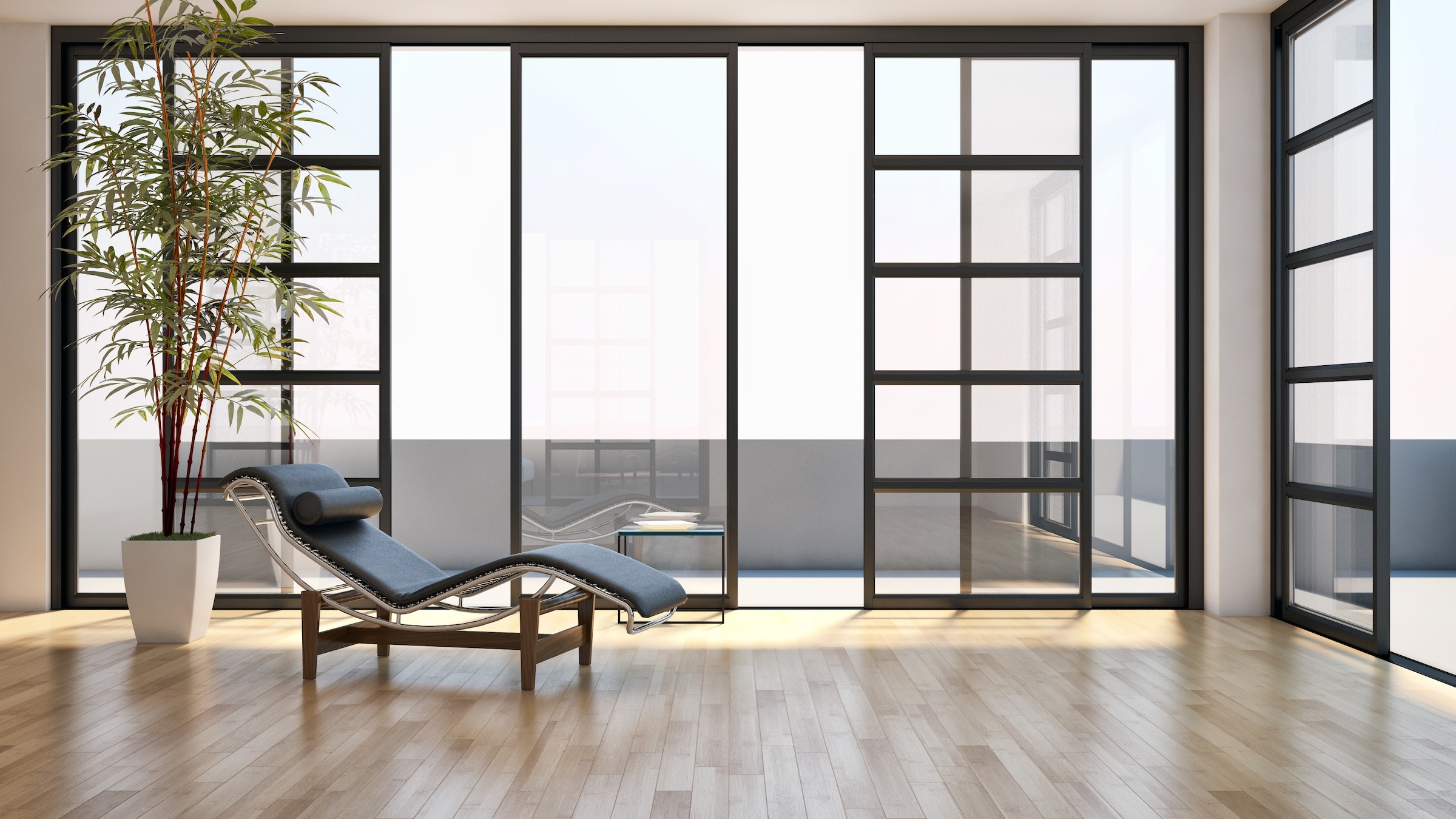
Sliding doors are the most common alternative to bifold doors, and with very good reason. They allow for much larger panels which means more glass and fewer visible frame lines.
Depending on the nature of your project, sliding doors can also have their frames hidden in the wall of a new extension. As a result, the surround frames looks virtually invisible, and the track can also be integrated to create flush floor finishes.
At Glideline we offer several types of sliding doors. These door options offer simple and effective replacements for dated patio doors and latest generation sliding doors providing:
Slim interlocks from 20mm upwards
Panel sizes up to 4 metres wide
Flush threshold options
Double or triple glazing, depending on the door model
Exceptional weather performance
Compared to bifolds, sliding doors:
Let in more light (more glass, less frame around 30% more)
Maintain the same indoor-outdoor level
Require no swing space
Glide easily with premium hardware and concealed tracks
Sliding doors are naturally better for today’s on trend architecture where large glass sliding walls are an essential part of the design. You’ll also find suitable options for high-end residential projects, coastal homes, houses in the countryside or with large gardens.
The best way of summarising sliding doors as alternatives to bifolds is this:
If your home enjoys a location with great views, a large garden or other external feature you want to see as much as possible, sliding doors work best.
2. Pocket Sliding Doors
Unique Product Proposition: Best for concealing panels entirely within the wall
Pocket doors take all the advantages of sliding doors and elevate them a step further. The nature of sliding doors is such, that they always need to park along the track when fully opened. You will typically lose two thirds or half of your available door opening.
Pocket doors enhance the functionality of conventional sliding systems by eliminating visible panels and maximising the opening width.
Rather than stacking at one end of the opening, each panel slides into a pre-formed cavity within the wall. The result is a completely open aperture, no visible doors, and zero intrusion into living space.
Used externally, pocket doors require an extended head and track as well as:
A dedicated wall cavity free of plumbing, electrical, or structural load
Proper drainage and weather detailing
Careful coordination between builder and your sliding door supplier
The benefits:
When open, pocket doors create a fully unobstructed opening
All visible frame and sash elements are removed
Tracks in the wall stay cleaner as they’re not exposed to the elements
Clean, architectural finish that adds real value to your home
The Glideline pocket doors are credible alternatives to bifold doors. We manufacture a large range of bespoke pocket doors, offering design flexibility without compromising on insulation or security. At the same time, we can create the precise drawings for door installers, builders and architects.
3. Slide-and-Stack (Slide-and-Turn) Systems
Unique product proposition: Letting you place garden and room furniture right up to the doors.
Whilst not a product we offer yet, in order to provide you with all the alternatives to bifold doors, it is worth giving you information about Slide and Stack or Slide and Turn doors, as they’re also known.
These door types combine some of the flexibility of bifolds with the sightline and running gear advantages of sliders. They look like bifold doors, but each panel slides along a single track independently. They are not concertina style or connected panels. You open the first door to 90 degrees, then pull each panel to the same side, also opening that panel fully to 90 degrees and continue with the remaining number of panels.
Here is an at a glance guide to the pros and cons of slide and turn doors
Disadvantages | Advantages |
Multiple operations needed to fully open | No visible door hinges |
Flush tracks and frames not possible | Like a slider, doors move along a track |
Thicker sightlines than sliding doors | Place furniture right up to the doors |
Cheaper slide and turn doors unreliable | Can create ventilation slots for airflow |
Premium models excellent but expensive | |
No corner or pocket sliding door option | |
Few models security or weather tested | |
We can support you with further information about slide and turn doors as alternatives to bifolds and how to integrate these into your project.
4. French Doors
Unique Product Proposition: More affordable doors with great features
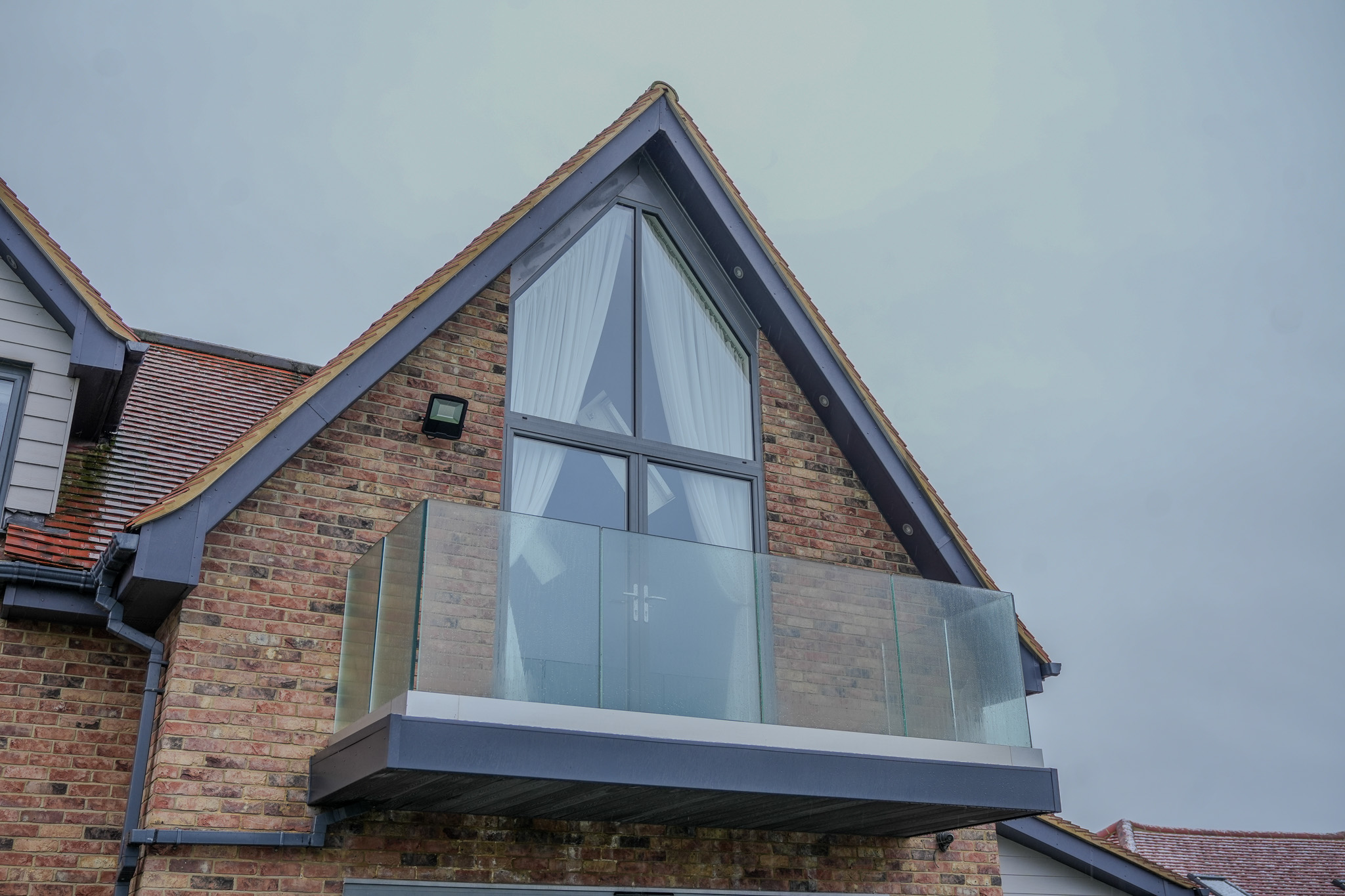
You’ll be familiar with French doors, and these remain an affordable option. Where the opening is typically around 2m or 2.5m wide, these can be a better alternative to bifold doors:
Easier access and better than a two panel folding door
95% clear opening, compared to a 50% opening on a two panel sliding door
Can open in our out
Compatibility with glazed side or top panels
You can incorporate opening windows for ventilation within side or top panels.
While not comparable to bifolds in large-scale openings, French doors are ideal when:
Glideline offers a fully thermally broken aluminium French door system. However, unlike other brands, we engineer our French door products out of our GB49 bifold door profiles. Here is how a Glideline French Door is better than classic aluminium doors
Glideline French Doors | Classic French Doors |
Matches our bifold doors exactly | Made with different profiles |
Up to 1200mm wide or 3000mm high | Up to 950mm wide and 2200mm high |
Slimmer aluminium sightlines | Thicker sightlines throughout |
Can recess the track like a bifold | Not as weatherproof ramp threshold |
Can integrate a tilt and turn window | Not possible |
Premium alternatives to bifold doors, made by Glideline
All alternatives to bifold doors offer trade professionals and homeowners meaningful benefits. The best choice depends on the project layout, desired finish, and how the space will be used.
For reduced sightlines and biggest glass panels, choose a sliding door
Sliding door benefits with no visual obstruction, talk to us about pocket doors
For smaller or more traditional openings, consider French
Modular flexibility with less weather protection, explore slide-and-stack doors
At Glideline, we manufacture and supply all major alternatives to bifold doors. Our team works closely with architects, trade installers, and homeowners to specify the right system and deliver precision-made glazing for every project.