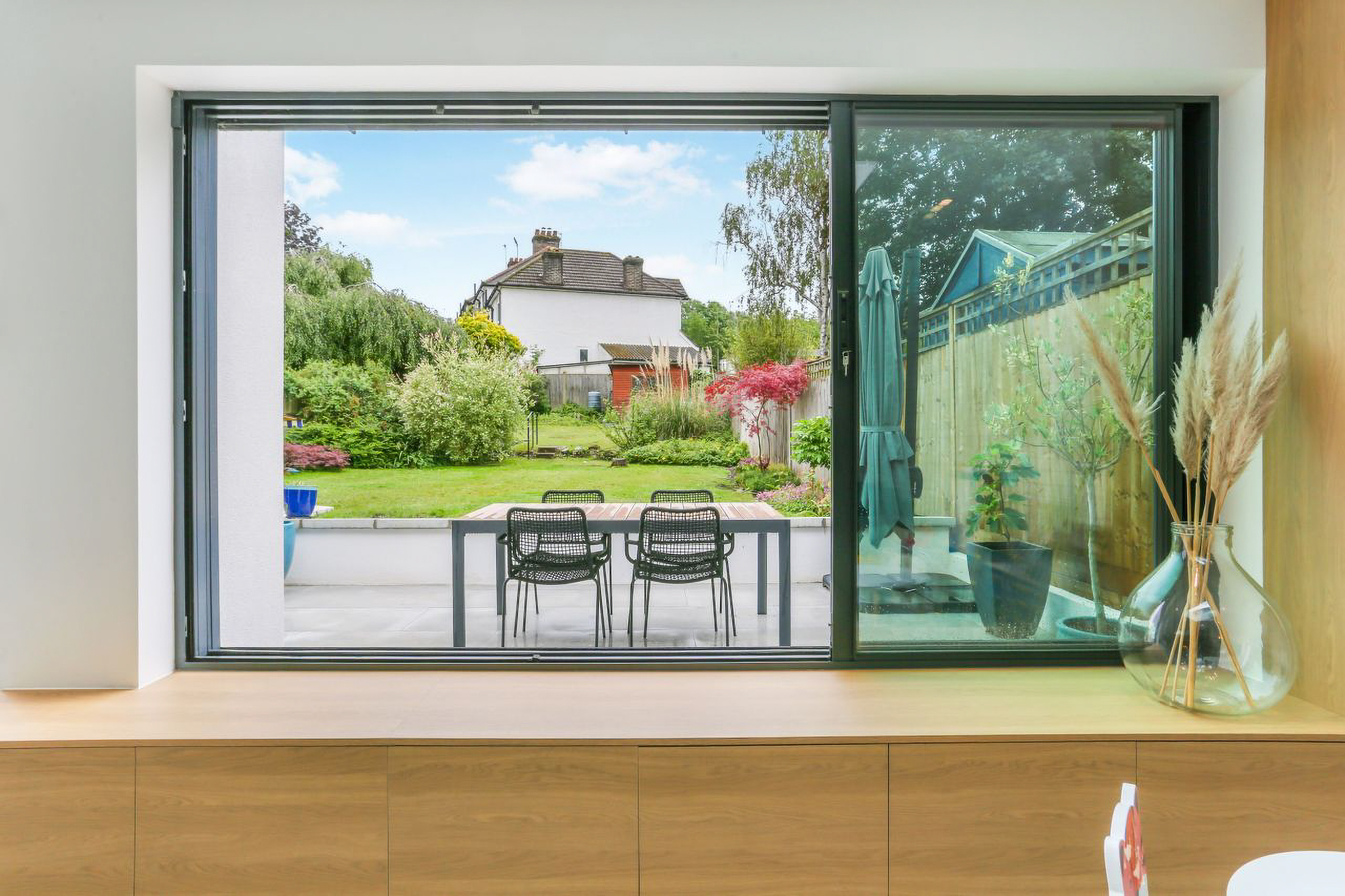
Minimal Sliding Window with matching doors in South Croydon
This gorgeous project in South Croydon, manufacturing a minimal sliding window with matching doors. Designed by KJC Architects.
Read the StoryA pivot door is a door that rotates on a vertical axis using a pivot mechanism mounted at the top and bottom of the panel, rather than side-mounted hinges fixed to the frame and door edge.
The pivot point is set back from the door edge, which means the panel swings in an arc that partially overlaps both the interior and exterior sides of the opening.
This mechanical difference changes how the door moves, what panel sizes it can support, how much glass or solid material can be used, and how the entrance looks and feels in practice. Pivot doors have moved from architectural curiosity to a genuine residential option in the UK over the past few years, particularly for front entrances.
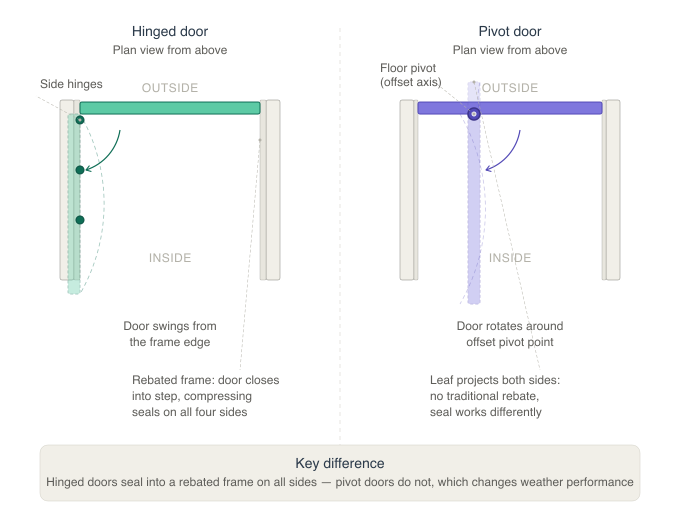
A conventional hinged door hangs from two, three or more hinges fixed into the side of the frame. The full weight of the panel is carried at those hinge points. Most hinged doors are limited by the load capacity of their hinges, which in turn restricts the practical width and height of the door panel.
A pivot door works differently. The panel sits on a floor-mounted pivot pin at the bottom and is stabilised by a matching pivot or 'top centre' at the top of the frame. The weight is transferred vertically through the pivot axis rather than being cantilevered from the side. This changes the load path and allows the mechanism to support much heavier and wider panels without compromising smooth operation.
Furthermore, because the pivot point is offset from the panel edge, around one third of the way in, the door does not swing in a simple arc like a hinged door.
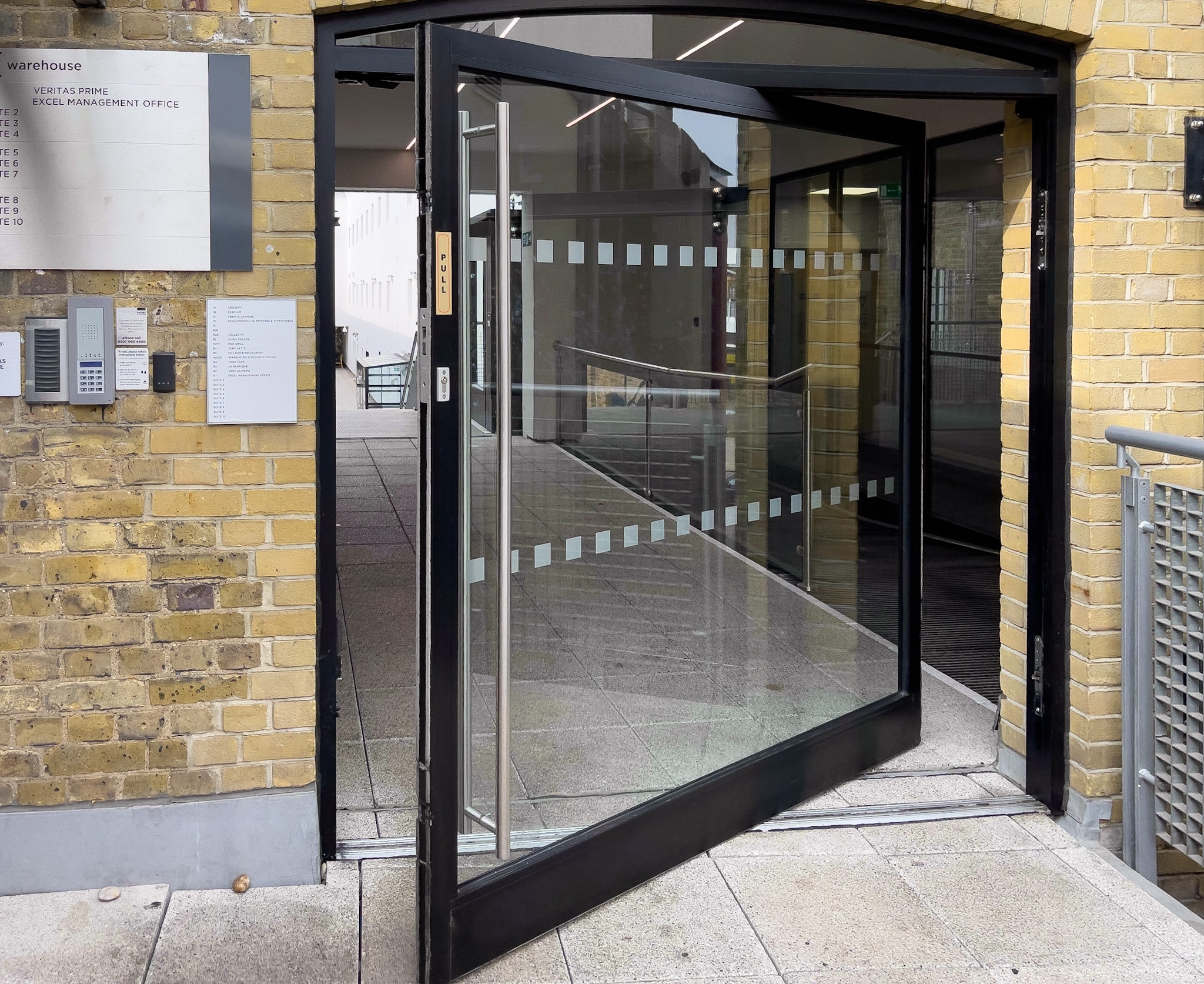
On a pivot door, one side of the panel moves outward while the other moves inward. This dual-action movement is part of what gives pivot doors their distinctive feel. In other words, a balanced, controlled rotation rather than a push-and-swing.
The concealed nature of the pivot hardware contributes to the clean appearance that makes these doors popular in architectural projects. There are no visible hinges on the frame face, which means uninterrupted sightlines on both the interior and exterior. One of the biggest attractions of a pivot door is the visual impact created by this opening action itself. Seeing one in operation helps explain why they have become so appealing for the UK renovation and new-build market.
Pivot doors are manufactured in several materials, each with different implications for performance, durability and suitability for external use. At the premium end of the residential market, pivot doors are commonly manufactured in aluminium or timber.
Aluminium is the most common choice for external pivot doors in the UK market, and for good reason. It offers an excellent strength-to-weight ratio, which matters when panel sizes go well beyond what timber or PVC-U can comfortably support. The material's structural rigidity is essential for supporting large, heavy door leaves without flex or distortion over time. This is why aluminium is the natural choice when you want a pivot door opening.
Aluminium pivot door profiles are thermally broken, meaning the inner and outer faces of the frame are separated by an insulating barrier that helps deliver low U-values and improved energy efficiency.
Aluminium is also dimensionally stable. It does not expand, contract, warp or absorb moisture in the way that timber can, which makes it a reliable choice for large-format entrance doors exposed to the UK climate.
Powder-coated and anodised finishes provide long-term weather resistance with minimal maintenance. A choice of over 150 RAL colours is typically available, along with wood-effect finishes for projects where a timber appearance is wanted without the maintenance commitment.
Timber pivot doors offer a traditional aesthetic and natural warmth. However, timber requires more ongoing maintenance, particularly in exposed external location, and large timber panels can be heavy, which places greater demands on the pivot hardware. Engineered timber sections help manage movement, but moisture management remains a long-term consideration for any external timber door in the UK.
Steel-framed pivot doors are used in high-end architectural projects where ultra-slim sightlines and an industrial aesthetic are the priority. Steel is exceptionally strong but naturally conductive, so external steel pivot doors require careful thermal design to manage condensation risk and minimise thermal bridging. They tend to sit at the top end of the price range.
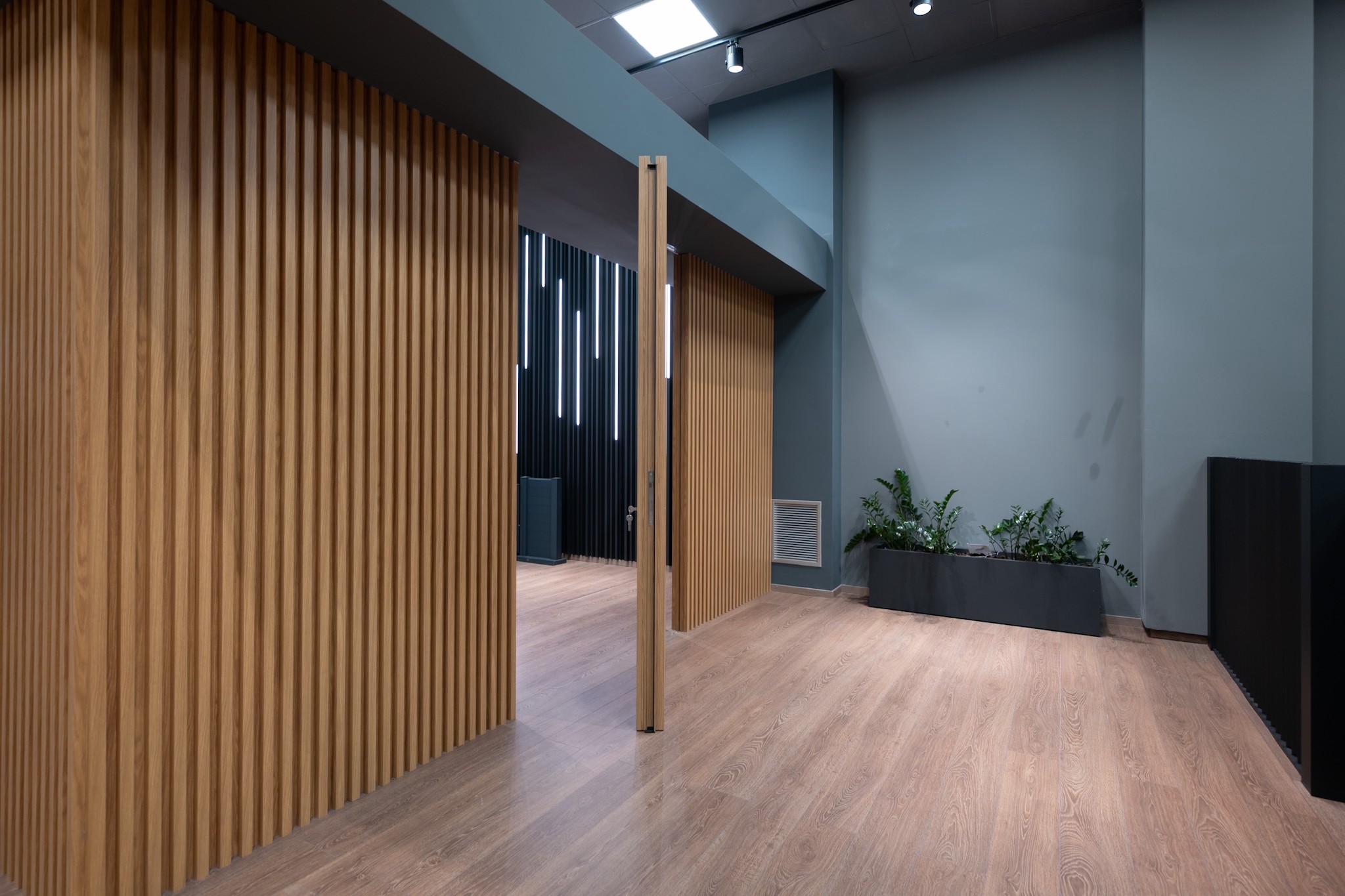
Some pivot door systems combine materials. For example, an aluminium structural frame with a timber interior lining, to balance aesthetics with performance. These can work well but add complexity to manufacturing and installation. Established manufacturers have been producing pivot doors in combinations including aluminium, timber and other materials for years.
The most common question from homeowners and specifiers encountering pivot doors for the first time is how they compare to a standard hinged front door. The differences go beyond the hinge mechanism.
A hinged door is constrained by the load capacity of its side-mounted hinges and the frame that carries them. In practice, this limits most residential hinged doors to around 1.0–1.1m wide before the door becomes unwieldy or the hardware struggles. That is perfectly adequate for a standard entrance, but it sets a ceiling on scale.
A pivot door removes that constraint. Because the weight is carried through the floor pivot, panel widths of 1.5m and beyond are practical. Some systems support panels over 2.0m wide. An aluminium pivot door can be manufactured at heights of 2.5 metres or more, and some brands at the very top of the market can exceed five metres high, subject to structural calculations and project-specific engineering. This opens up design possibilities that a hinged door simply cannot match: full-height glazed entrance panels, oversized solid panels, and architectural entrances that make a visual statement.
This is the single most important practical difference between the two systems, and it is worth understanding clearly.
A hinged door closes against a fully rebated frame . This means the door leaf sits into a stepped recess in the frame profile. There is a consistent seal and compression all around the door when it is closed.
A pivot door does not close into a traditional rebate in the same way. Because the door leaf projects on both sides of the frame when fully open, the seal between door and frame works differently. The sealing system relies on compression gaskets and weather strips rather than the mechanical advantage of a rebated frame. This means weather performance , particularly in exposed locations, needs more careful specification than it would for a standard hinged door.
This does not mean pivot doors cannot perform well externally. It means the specification, the threshold detailing and the level of exposure at the entrance all need to be considered together. A canopy or a porch design helps with weather protection.
Pivot doors require more precise specification and installation than hinged doors. The floor pivot must be accurately positioned and set into the floor slab or threshold during the build phase. The panel must be properly balanced, and the structural opening needs to accommodate the dual-swing arc. A hinged door is more forgiving in this respect.
For straightforward openings with standard dimensions, a well-specified hinged door remains the practical choice. Where the project calls for scale, presence and architectural impact at the main entrance, the pivot door is the better tool for the job.
Yes, and this is increasingly the primary application for pivot doors in UK residential projects. A well-engineered aluminium pivot door is designed for external use and should meet the same performance requirements as any other external door system: thermal insulation, weather resistance, air permeability and security.
The key performance considerations for an external pivot door are:
A thermally broken aluminium profile with appropriate glazing can achieve U-values well below 1.0 W/m²K, meeting or exceeding current Building Regulations requirements. All doors today in aluminium are thermally insulated.
External pivot doors need robust sealing, drainage and threshold detailing. Flush thresholds are popular for their clean appearance and accessibility, but they must include integrated drainage to manage water run-off effectively. In the UK climate, this is not optional.
External entrance doors should be tested to PAS 24, the UK standard for enhanced security. A pivot mechanism does not inherently compromise security. What matters is the locking system, the profile strength, and the overall system design. Quality aluminium pivot door systems use multi-point locking integrated into the door leaf and frame, and PAS 24-tested systems are available.
Because the pivot mechanism creates a different seal profile to a hinged door, air permeability testing matters. Well-engineered systems achieve Class 4 air permeability, which is the highest classification under EN 12207.
Because the sealing mechanism on a pivot door differs from a fully rebated hinged door, the level of weather exposure at the entrance is a practical consideration. A pivot door recessed under a porch, canopy or overhang will generally perform well. A pivot door fully exposed to driving rain on a south-west elevation, with no weather protection at all, faces more demanding conditions, and you may need to accept that the seal is not identical to a rebated door in the most extreme weather.
This is not a reason to avoid pivot doors externally. It is a reason to think about the entrance design as a whole. Manufacturers and experienced installers generally recommend some form of recessed entrance or overhang to protect the door from direct weather exposure, particularly in exposed countryside or coastal locations. A well-specified pivot door with appropriate weather protection at the entrance will perform reliably for years.
No door type is universally the best solution, and pivot doors are no exception. There are practical considerations worth understanding before specifying one.
Pivot doors generally cost more than standard hinged entrance doors. The hardware is more specialised, the engineering tolerances are tighter, and the panels themselves tend to be larger. This is a premium product category, and the pricing reflects that. Typical costs range from £3,000 to £10,000 or more, supplied and fitted, depending on size, material and specification.
Installation requires more precision. The floor pivot must be set at the correct position during the build phase, and the structural opening needs to be prepared to closer tolerances than a standard door frame. Getting this wrong affects the balance and operation of the finished door, so installer experience with pivot systems matters. The UK pivot door market is still relatively young, and not every installer has experience fitting them. Choosing an installer who has worked with pivot systems before is important.
The dual-swing arc means the door occupies space on both sides of the opening when it moves. In tight entrance halls or restricted approaches, this can be a practical limitation. It is worth checking clearances carefully at the design stage.
Finally, not every opening suits a pivot door. Standard-width openings of around 900mm do not benefit from the pivot mechanism. A conventional hinged door will perform just as well and cost less. Pivot doors come into their own where the opening is wide enough to justify the engineering: typically 1.2m and above, and ideally wider.
A pivot door is worth considering when the project calls for a front entrance that goes beyond what a standard hinged door can deliver. That usually means one or more of the following: an oversized opening, a desire for minimal sightlines and maximum glass, an architectural design language that prioritises clean lines and visual scale, or a requirement for a statement entrance that sets the tone for the rest of the building.
In UK residential projects, the most common application is a contemporary front entrance in new-build or major renovation work. The pivot door handles the scale, the aluminium profile delivers the thermal and weather performance, and the flush threshold provides clean integration with both internal and external floor finishes. For properties with a double-height hallway, an oversized opening or a cantilevered porch, a pivot door is one of the most effective ways to create an architectural focal-point entrance.
For rear elevations and garden openings, sliding doors and bifold doors remain the more practical choice. They are designed to open up wide spans rather than create a single statement panel. But for the front of the house, a well-specified pivot door occupies a space that no other door type quite matches.
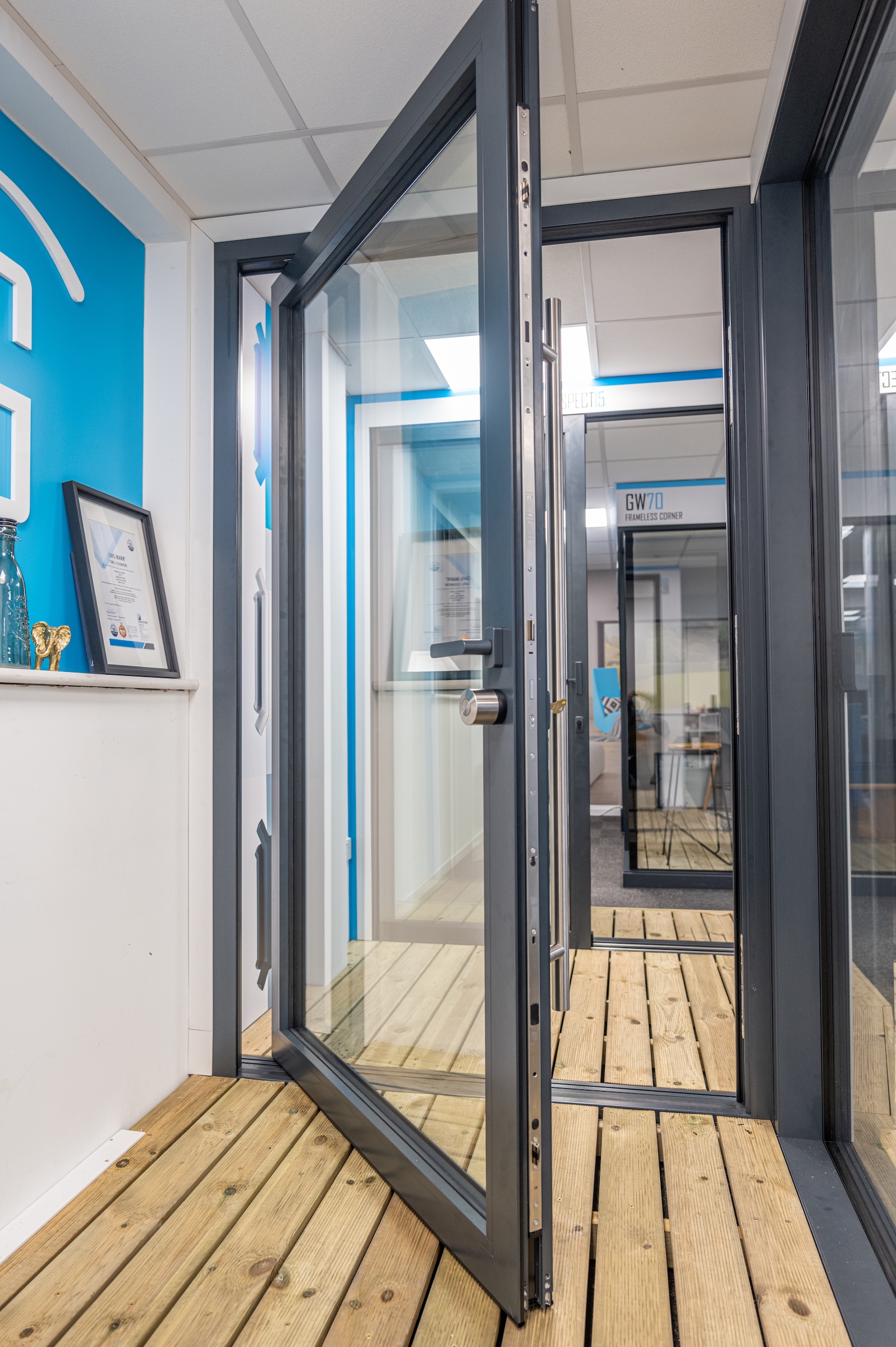
The Glideline GPD80 is an aluminium pivot front door engineered for large-format entrance applications. It supports panel sizes up to 2.1m wide by 3.0m high, features an 80mm thermally broken profile, achieves U-values from 0.77 W/m²K with triple glazing, and is security tested. It is available in open-in or open-out configurations with optional sidelights, flush threshold and integrated drainage.
The GPD80 is designed with both the homeowner and the trade installer in mind. Straightforward to order, less complex to fit than many pivot systems, and backed by Glideline's nationwide network of professional entrance door installers.
View the full GPD80 specification and request a quote on the GPD80 Aluminium Pivot Door product page. For a broader comparison of front door materials and types, see our complete front door guide. For guidance on choosing between door types for rear elevations, see our guide to alternatives to bifold doors, or explore the full Glideline door range.
This gorgeous project in South Croydon, manufacturing a minimal sliding window with matching doors. Designed by KJC Architects.
Read the Story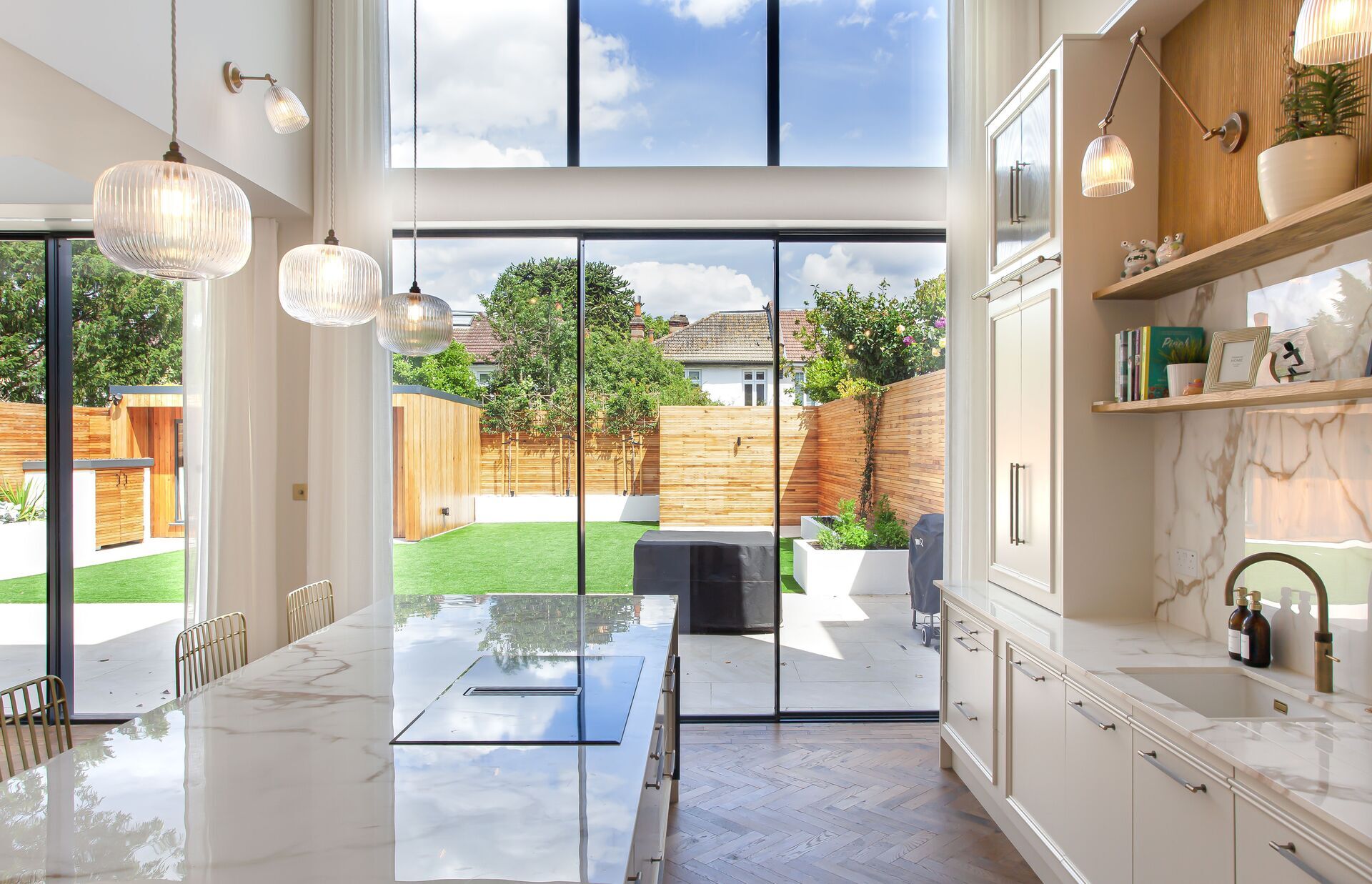
Looking for Cortizo sliding doors? Glideline manufactures and enhances Cortizo aluminium sliding doors for UK homes, weather, drainage, hardware, installation and long-term performance.
Read the Story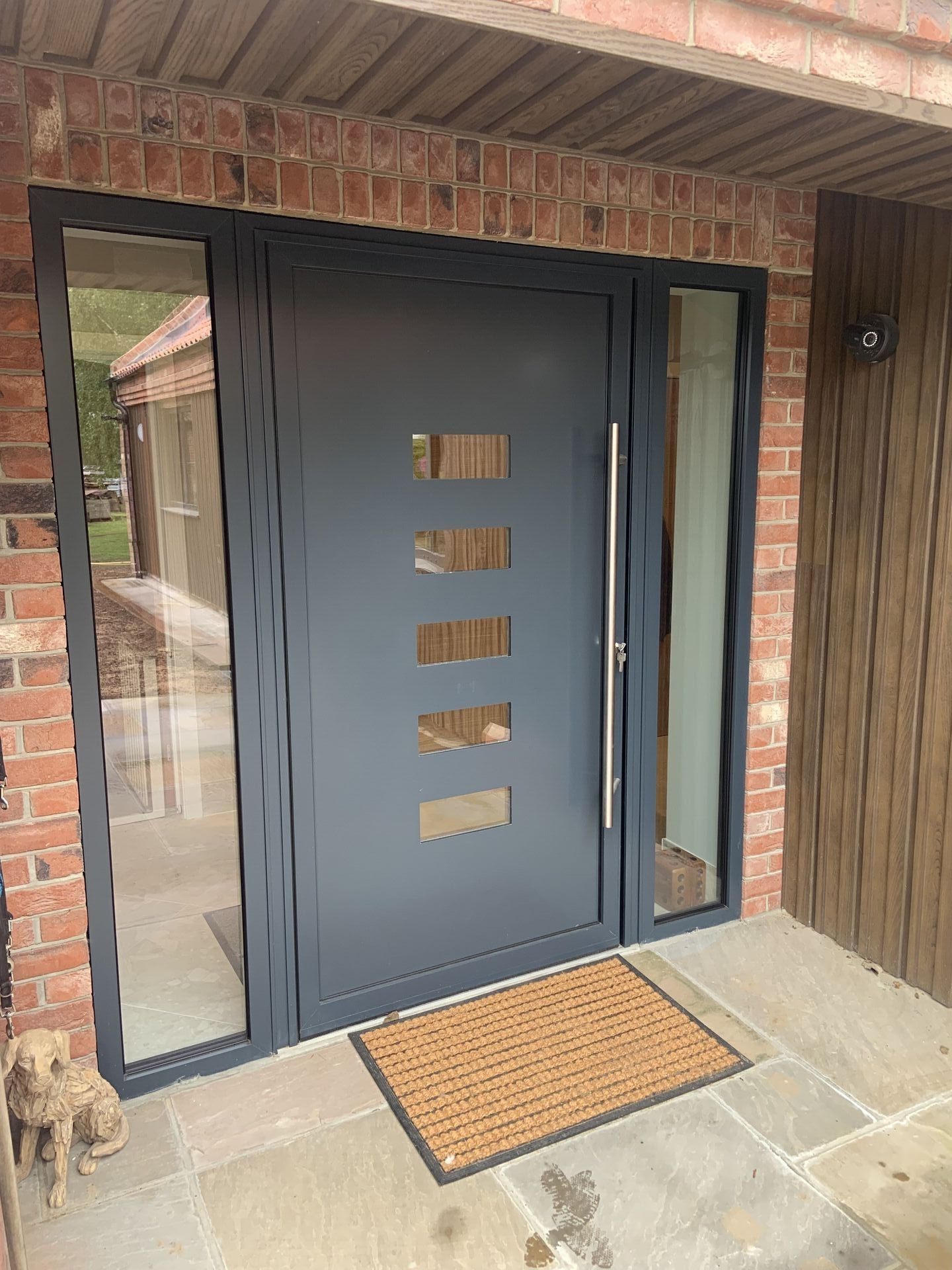
A Complete Guide to Types, Materials and what to look for when considering a new front door.
Read the Story